Is Your Savings Account Paying Enough? UK Savings Rates Compared — October 2026
📋 In this article
- UK savings rates compared: October 2026
- 1. Starling Easy Saver: 5% with a six-month clock attached
- 2. NS&I: 4.99% for a one-year commitment
- 3. Principality: a cash ISA with three withdrawals
- 4. Virgin Money: a fixed cash ISA at 4.77%
- 5. Santander: 8% for building a pot monthly
- 6. first direct: 7% fixed, with tighter access
- What difference does the rate make on £1,000?
- Cash ISA or ordinary savings account?
- Check protection as well as interest
- My five-minute savings check
- Frequently asked questions
- Which account pays the highest rate in this comparison?
- Should I fix my emergency fund?
- Does a bonus make an account bad?
- The MMOnline verdict

Is your savings account paying enough? A bank-switching bonus is easy to notice. A disappointing savings rate can sit quietly in the background for years. This UK savings comparison looks at six accounts across easy access, fixed-rate savings, cash ISAs and regular savers—and the conditions behind their headline rates.
Rates and provider pages checked: 8 October 2026. This is a selected comparison, not a whole-market ranking or a claim that these are the best accounts for everyone. I have researched the provider terms; I am not claiming to have opened or tested all six. Rates and availability can change before you apply.
We have recently covered Santander's switching offer and Barclays' switching offer. This time the question is different: once you have money set aside, what interest could it earn?
UK savings rates compared: October 2026
AER means Annual Equivalent Rate: an annual comparison measure allowing for compounding. It does not mean a six-month bonus lasts a year. Gross interest is before any tax due; cash ISA interest is tax-free under the applicable rules.
| Account | Headline AER | Deposit requirement | Access and main condition |
|---|---|---|---|
| Starling Personal Easy Saver | 5.00% variable, including bonus | No minimum; promotional rate up to £25,000 | Unlimited withdrawals; qualifying new customers; bonus lasts 6 months |
| NS&I Guaranteed Growth Bonds, 1 year | 4.99% fixed | From £500 | No withdrawals during the term; taxable interest |
| Principality Online Bonus Triple Access Cash ISA | 4.25% variable, including bonus | From £1; ISA allowance applies | 3 withdrawals per tax year; 12-month bonus |
| Virgin Money 1 Year Fixed Rate Cash E-ISA, Issue 708 | 4.77% fixed | From £1; fund within 30 days | Fixed until 24 October 2027; early withdrawal charge |
| Santander Regular Saver | 8.00% variable, including bonus | £1 minimum balance; up to £200 per account month | Santander current account required; bonus lasts 12 months |
| first direct Regular Saver | 7.00% fixed for 12 months | £25–£300 monthly | 1st Account required; no partial withdrawals |
These are not interchangeable. You cannot put a £10,000 lump sum straight into a regular saver at its headline rate. An account with restricted withdrawals is also different from an emergency fund you can access repeatedly.

1. Starling Easy Saver: 5% with a six-month clock attached
The 5.00% AER offer combines a variable standard rate with a fixed 2.50% AER bonus for six months. It applies up to £25,000 to qualifying new personal customers who open their current account from 1 October 2026 and apply for the saver within 30 days. Closing a personal current account after 30 September 2026 makes you ineligible for that offer.
There is no minimum opening deposit and withdrawals to the linked account are unrestricted. The underlying rate is currently 2.50% AER variable after the bonus or above the promotional balance cap. Other new saver applications have a different advertised rate, so check your eligibility.
My assessment: useful to investigate for accessible cash, provided you diary the bonus expiry. Calling it “5% for a year” would be misleading.
Official Starling rates, eligibility and summary box.
2. NS&I: 4.99% for a one-year commitment
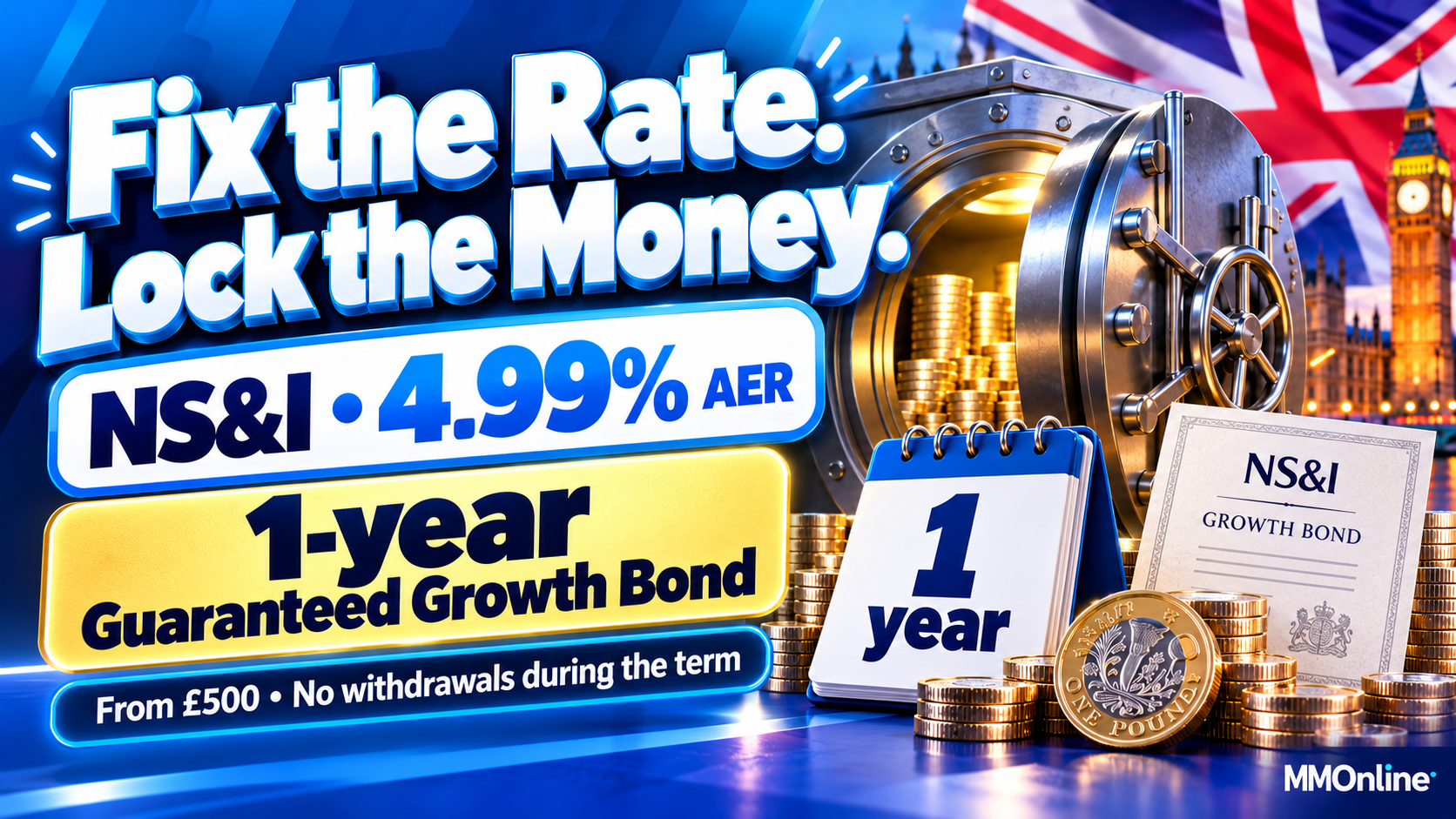
The one-year Guaranteed Growth Bond, Issue 93, pays 4.99% gross/AER fixed and starts at £500. You cannot withdraw during the term. Interest is taxable in the tax year the bond matures.
NS&I also lists longer terms, but I have used the one-year option here to keep the comparison focused. Its savings are backed by HM Treasury rather than limited to ordinary FSCS deposit cover.
My assessment: worth comparing for a lump sum you can genuinely leave alone. “Guaranteed” describes the agreed rate and security arrangements; it does not make the account suitable for money you may need next month.
Official NS&I product page and current issues.
3. Principality: a cash ISA with three withdrawals
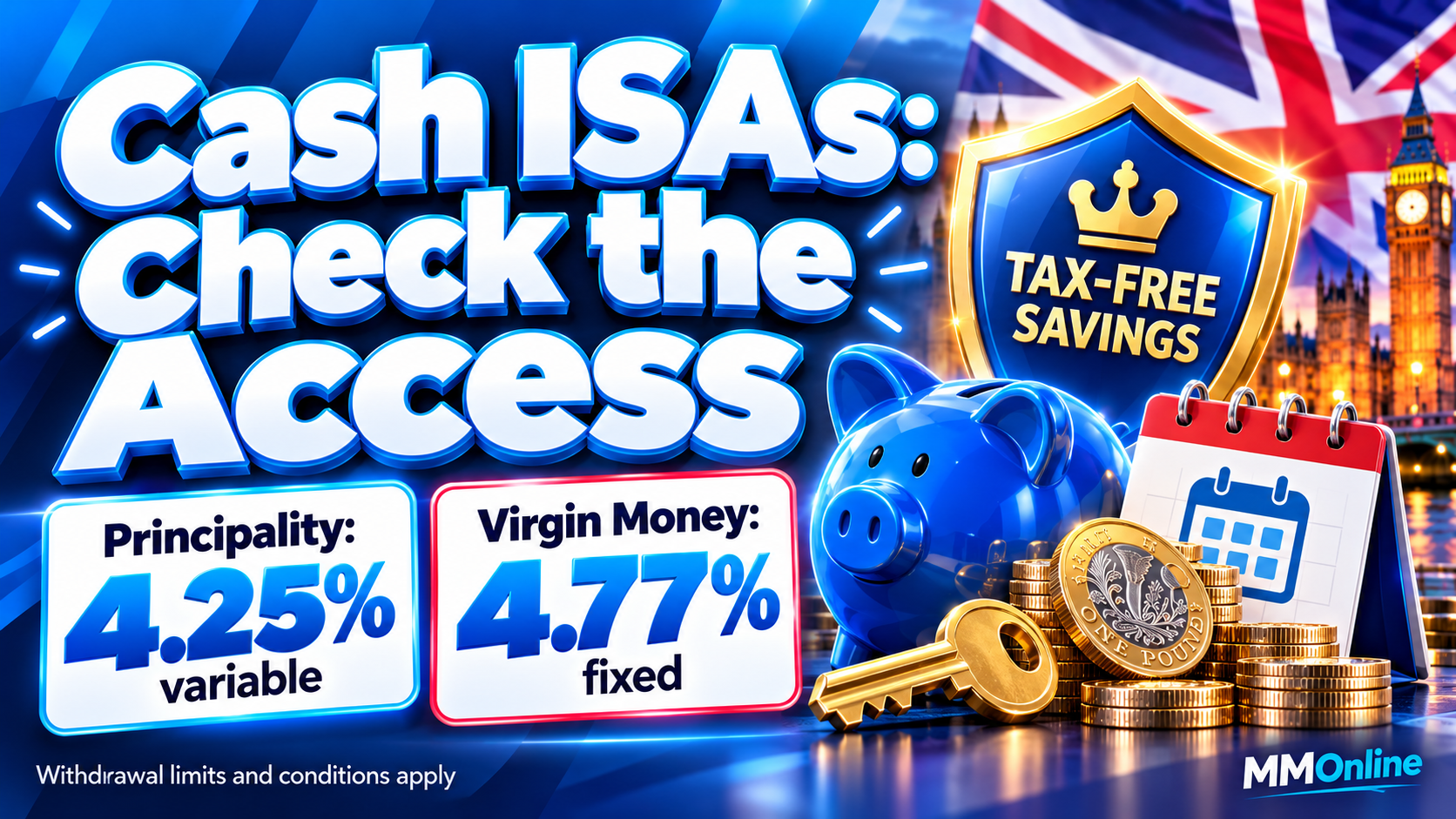
The Online Bonus Triple Access Cash ISA advertises 4.25% AER tax-free variable, including a 1.90% variable bonus for the first 12 months. The underlying rate is currently 2.35%.
You can open online from £1 as a UK resident aged 18 or over. It permits three withdrawals per tax year, with closure or transfer available separately. It is flexible: qualifying withdrawn money can be replaced in the same tax year without using more allowance. A linked UK current account in your name is required.
My assessment: a possible home for a pot you rarely touch. Three withdrawals can be plenty for one person and inconvenient for another. Set a reminder before the bonus ends.
Official Principality rate, summary box and access rules.
4. Virgin Money: a fixed cash ISA at 4.77%
Issue 708 of the 1 Year Fixed Rate Cash E-ISA pays 4.77% AER tax-free, fixed until 24 October 2027. The minimum is £1. Deposits and ISA transfers must be received within 30 days of opening.
Early withdrawals incur a charge equivalent to 60 days' interest on the amount withdrawn. It is not flexible: withdrawn funds cannot simply be replaced under flexible-ISA rules.
My assessment: compare it if you want tax-free interest and can commit to the fixed period. Check the actual maturity date rather than assuming it is exactly one year from the day you apply.
Official Virgin Money Issue 708 terms.
5. Santander: 8% for building a pot monthly
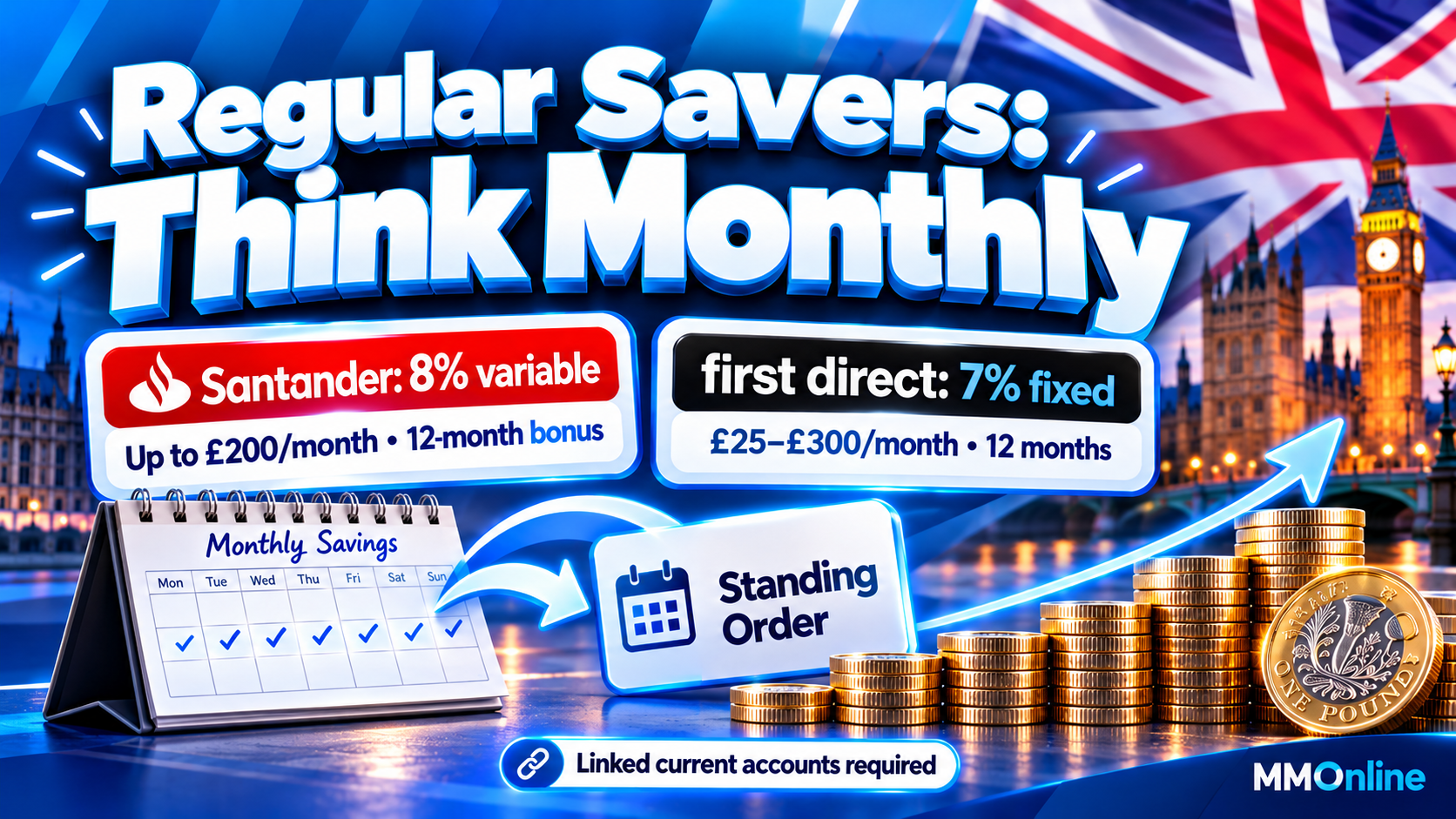
The Regular Saver pays 8.00% AER/gross variable, including a 5.00% variable bonus for 12 months. Its underlying rate is currently 3.00%. You need a Santander current account and can pay in up to £200 per account month. There is no compulsory monthly payment; keep at least £1.
Withdrawals go to your Santander current account. Putting withdrawn money back counts towards the monthly deposit limit.
Santander's illustration shows £200 monthly producing £2,400 in deposits plus up to £104 interest in year one, assuming its specified payment dates, no withdrawals and unchanged rates.
My assessment: an attractive headline for eligible monthly savers, but not 8% on £2,400 held for a full year: most of the money arrives later.
Official Santander terms and worked illustration.
6. first direct: 7% fixed, with tighter access
The Regular Saver pays 7.00% AER/gross fixed for 12 months on permitted savings. You must hold a first direct 1st Account throughout and save £25–£300 monthly by standing order.
No partial withdrawals are allowed. Early access means closing the saver and receiving the standard Savings Account variable rate instead. Unused monthly allowance can be carried forward within its maximum-balance rules.
The provider illustrates £300 monthly producing £3,600 in deposits plus £136.50 interest, assuming payments on the first of each month and no withdrawals.
My assessment: the fixed rate gives certainty for eligible monthly savings, but the withdrawal restriction makes it a different proposition from Santander's account.
Official first direct terms and illustration.
What difference does the rate make on £1,000?
For a simple annual comparison, assume a £1,000 lump sum stays untouched for 12 months, the stated AER applies throughout, interest remains in the account and there are no fees. Before any tax:
| Illustrative annual rate | Interest on £1,000 | Ending balance |
|---|---|---|
| 1.00% | £10.00 | £1,010.00 |
| 4.25% | £42.50 | £1,042.50 |
| 4.77% | £47.70 | £1,047.70 |
| 4.99% | £49.90 | £1,049.90 |
These are calculations, not a guarantee for variable-rate products. The difference between 1% and 4.99% is £39.90 on £1,000, or £399 on £10,000 under the same assumptions.
I have deliberately excluded Starling's promotional 5% from this full-year table because its bonus expires after six months. Regular savers also need a monthly-deposit calculation: multiplying their final deposited total by the headline percentage overstates the interest.
Cash ISA or ordinary savings account?
A cash ISA shelters interest from UK tax, subject to the rules. The total ISA subscription allowance for 2026/27 is £20,000 across ISA types, not £20,000 for every account you open.
Outside ISAs, the Personal Savings Allowance is generally £1,000 of interest for basic-rate taxpayers, £500 for higher-rate taxpayers and zero for additional-rate taxpayers. Other allowances may apply, particularly on lower incomes. Your circumstances determine whether tax is due.
Compare the interest you keep after tax, not just the rate. If your interest is covered by allowances, an ordinary savings account may be competitive; if you exceed them, the ISA wrapper can matter more. For existing ISA money, use the provider's ISA transfer process rather than withdrawing it yourself.
Official guidance: ISA rules, flexible withdrawals, and tax on savings interest.
Check protection as well as interest
FSCS deposit protection is currently up to £120,000 per eligible person, per authorised firm. Different banking brands can share one authorisation, so several accounts do not necessarily give separate limits. Use the official FSCS protection checker before placing larger balances. NS&I has its separate government-backed arrangement.
My five-minute savings check
- Find your actual current rate in the app or statement.
- Decide how much must remain accessible.
- Compare accounts in the same category.
- Check eligibility, deposit caps, withdrawal rules, fees and bonus expiry.
- Calculate the benefit in pounds and diary the next review.
The small gap between two competitive accounts may not justify much administration on a modest balance. Moving away from a genuinely poor rate can have a more noticeable effect.
Frequently asked questions
Which account pays the highest rate in this comparison?
Santander's 8% regular saver has the highest headline, but monthly funding limits mean it is not a lump-sum alternative. There is no single winner across these different account types.
Should I fix my emergency fund?
A fixed product that prevents withdrawals is a poor match for cash you may need unexpectedly. Keep the access requirement central to your choice.
Does a bonus make an account bad?
No. It makes the expiry date important. Compare the promotional period and what happens afterwards.
The MMOnline verdict
Your bank might reward you for switching—but is it rewarding you for saving? Start by checking the account you already have. Choose access and eligibility first, then compare the rates that genuinely apply to you.
If you are building a pot from scratch, our seven places to make extra money online gives practical earning routes. The Sunday Money Reset can help free up money to save.
This researched comparison provides general information, not personalised financial advice. Provider links are ordinary links; no referral or affiliate tracking has been added. Check current terms before applying.