
10 Realistic Ways to Make Extra Money Before Christmas 2026
📋 In this article
- 1. Sell the stuff sitting around your house
- 2. Mystery shopping — yes, this is still a real thing
- 3. Paid surveys — small money, but very easy to start
- 4. Go after paid research studies, not just surveys
- 5. Christmas seasonal work — start looking now
- 6. Get cashback on the Christmas shopping you’re going to do anyway
- 7. Check your referral bonuses
- 8. Sell a local service
- 9. Turn your hobby into Christmas money
- 10. Have a Christmas “money hunt”
- So how much could you realistically make before Christmas?
- ⚠️ One boring but important word: tax
- My challenge for this weekend
- 💸 Want more genuinely useful money ideas?
- Sources checked
- Keep exploring MMOnline
Last checked: 2 October 2026.
Christmas has an irritating habit of arriving at exactly the same time every year.
And yet somehow December still manages to sneak up on us like:
“SURPRISE! Would you like to spend £600 in the next three weeks?” 😂
So rather than pretending we’re all going to launch a dropshipping empire, become an AI millionaire and retire to Barbados before Santa gets here, let’s look at something more useful:
What can you genuinely do between now and Christmas to bring in some extra money?
Some of these could make a few quid. Some could make considerably more. And a couple are things I’ve actually done myself — because MMOnline is supposed to be about real-world money making, not screenshots of Lamborghinis rented by somebody selling a £997 course.
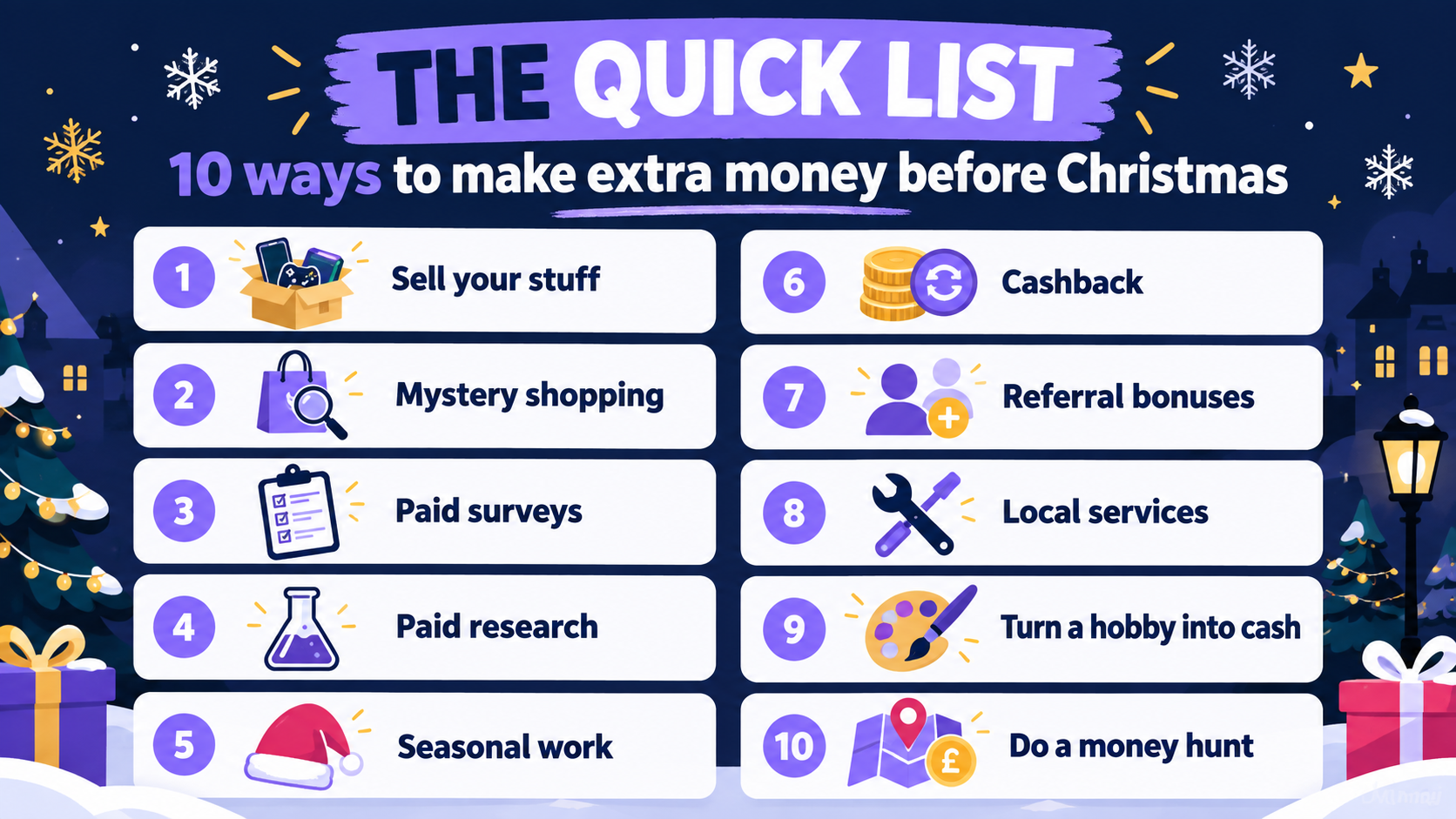
1. Sell the stuff sitting around your house
This is still probably the fastest way for most people to find £100–£500 without actually getting another job.
Have a look around: old phones, tablets, games, camera gear, clothes, tools, collectables — and that mysterious kitchen gadget you bought because apparently you were going to make fresh pasta every Tuesday.
You weren’t. Sell it. 😂
For UK private sellers, eBay currently says selling is free in most categories, with 300 free listings per month. Optional upgrades, overseas delivery and some categories can still involve charges.
Vinted, Facebook Marketplace and local selling groups are alternatives depending on what you’re shifting.
MMOnline tip: check completed or sold listings before deciding what something is worth. The dusty thing you’ve ignored for five years may be worth considerably more than you think.
2. Mystery shopping — yes, this is still a real thing
This is one I can talk about from actual experience.
Mystery shopping is not:
Walk into Harrods, buy a Rolex, eat lobster and somebody refunds everything.
Sadly. 😂
It can involve visiting shops, restaurants and other businesses and checking customer service, product knowledge, displays, waiting times, whether required questions were answered correctly, and whether staff followed a particular process.
I’ve done mystery-shopping and fieldwork assignments myself. Sometimes there is a fee, sometimes reimbursement, sometimes both.
The downside is that you need to read the instructions properly. Missing one required photo or forgetting one question can turn an easy job into a right pain in the backside.

If that sounds like your sort of thing, MMOnline already has a Mystery Shopping & Task Apps section to explore.
3. Paid surveys — small money, but very easy to start
Surveys are not going to pay your mortgage. Let’s get that nonsense out of the way immediately.
But they can turn otherwise wasted time into a bit of Christmas money.
Two names worth looking at are Prolific and Qmee.
Prolific is more research-focused. Its current participant rules say researchers must pay at least £6 per hour, with £9 per hour or more recommended.
Qmee is more conventional survey territory and currently advertises no minimum PayPal cash-out amount.
The trick? Don’t spend 25 minutes chasing 34p while ignoring something that could pay £20. Use surveys for bus journeys, TV adverts, waiting rooms and the bits of the day when you’d otherwise be scrolling nonsense.
4. Go after paid research studies, not just surveys
This is where things can become more interesting.
Companies and researchers sometimes need people for interviews, product testing, website testing, focus groups and longer research projects.
Platforms such as User Interviews and Respondent recruit people for paid studies. The UK is currently supported by User Interviews, and Respondent says you’re paid after you’re selected and complete the study; screening questionnaires themselves are not necessarily paid.
These can be a much better use of an hour than grinding through dozens of tiny surveys.
The catch? You may apply for plenty and get selected for very few. Don’t mentally spend the money before you’ve actually been accepted.
5. Christmas seasonal work — start looking now
If you want something more predictable than apps and surveys, this is the obvious time of year.
Retailers, delivery companies, warehouses and hospitality businesses all need extra bodies as Christmas approaches.
Royal Mail’s 2026 Christmas recruitment is already open, including seasonal mail sorters and other temporary roles, with additional roles also handled by recruitment partners depending on location.
That’s why October is a much better time to look than 18 December when you suddenly decide a Christmas job might be useful.
Search for terms such as Christmas temp, seasonal assistant, warehouse operative, mail sorter, retail Christmas assistant and temporary customer service.
This is not glamorous passive income. It is, however, actual income. Sometimes boring wins.
6. Get cashback on the Christmas shopping you’re going to do anyway
This doesn’t technically create money from thin air. Neither does most of the internet despite what TikTok says.
But if you’re about to spend money on presents, clothes, travel, hotels, electronics or Christmas food, getting some of it back is considerably better than getting none of it back.
Check cashback sites before buying rather than remembering 20 minutes afterwards.
And compare the cashback rate with any voucher code or direct retailer discount — cashback isn’t automatically the cheapest deal.
We’ve got a broader MMOnline cashback section if you want to dig further.
7. Check your referral bonuses
This one is easy to overlook.
Open the apps and services you already genuinely use and check whether they currently have a referral scheme.
Banks. Cashback sites. Money apps. Shopping services. Subscription services. Reward apps.
For example, TopCashback currently has an October referral promotion where eligible existing members can receive a bonus when someone joins through their referral link and reaches the qualifying cashback threshold. The exact amount depends on the member’s account type and the current terms.
But please don’t become Referral Link Dave and start messaging people you haven’t spoken to since Year 9.
Use referrals when you genuinely use the thing + the other person could genuinely benefit. And disclose that you get something from it.
8. Sell a local service
This is old-fashioned. Which is probably why people forget how effective it can be.
Ask yourself:
What can I do that somebody nearby doesn’t want to do themselves?
Dog walking, gardening, cleaning, putting furniture together, present wrapping, photographing items for sellers, helping someone list things online, basic tech help, shopping and errands, decorating, tutoring or pet sitting can all be possibilities.
You don’t need to build Edward’s Global Dog Walking Holdings PLC.
You need one person willing to pay you for solving a problem. Then perhaps another one.
9. Turn your hobby into Christmas money
Christmas is one of the few times when people actively want handmade, personalised and unusual things.
If you can crochet, knit, sew, bake, photograph, draw, make jewellery, design cards, personalise gifts or make decorations, there may be something sellable there.
But notice I said may.
A handmade item that takes six hours to produce and sells for £8 is not a thriving side hustle.
It’s a hostage situation. 😂
Work out materials + selling fees + postage + your time before deciding you’ve discovered your new empire.
10. Have a Christmas “money hunt”
This one barely qualifies as making money. I don’t care. Money found is money available.
Set aside one hour and check forgotten cashback balances, reward points, PayPal, Revolut, survey balances, old gift cards, retailer credit, unused vouchers, refunds you never chased, subscriptions you meant to cancel and credit sitting in apps.
You might find £4. You might find £140. Either is better than leaving it scattered across six apps until 2031.
So how much could you realistically make before Christmas?
This is where I’m deliberately not going to write:
“Follow these ten steps and make £3,847 by December 25!”
Because I haven’t got a crystal ball and neither has the bloke making that YouTube thumbnail.
It depends entirely on what you do. Someone with valuable unused electronics could raise hundreds quickly. Someone doing a few surveys on the bus might make considerably less. Someone who gets a seasonal job could earn far more.
The useful strategy is to stack several sensible methods rather than look for one magical one.
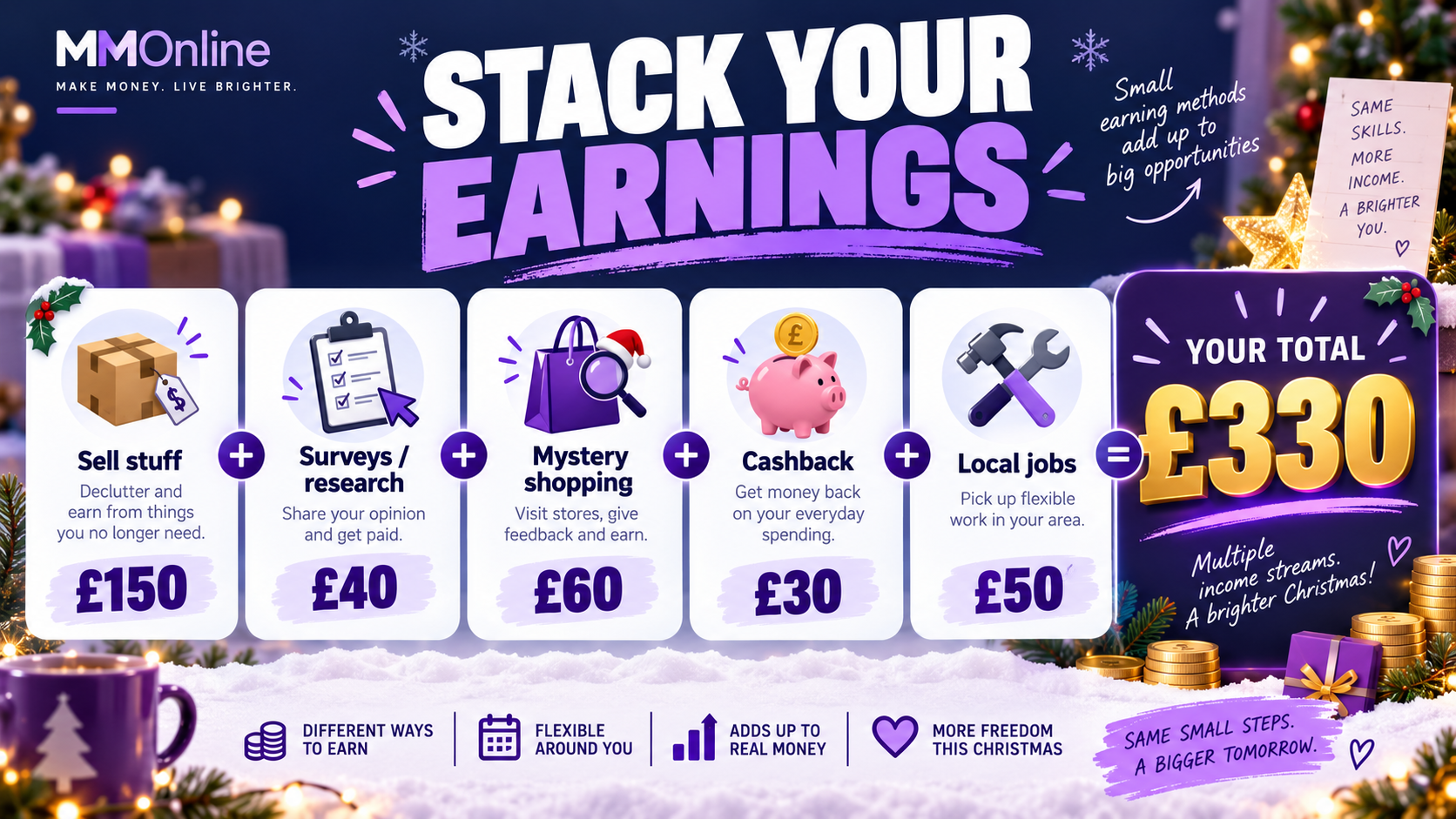
For example:
- Sell £150 of unused stuff
- £40 of surveys/research
- £60 mystery shopping
- £30 cashback
- £50 local side jobs
That adds up to £330.
Not because you’ve “escaped the matrix”. Because you did five fairly boring things that produced money.
And that’s much more MMOnline.
⚠️ One boring but important word: tax
Extra income isn’t automatically invisible just because it came through an app.
HMRC currently has a £1,000 trading allowance for qualifying trading and miscellaneous income. If your total gross trading income goes above £1,000 in the tax year, you need to check whether you must report it.
Selling your own unwanted personal possessions is different: HMRC says people clearing out ordinary unwanted items will usually not owe Income Tax simply because they sold them online. If you are buying or making goods specifically to sell for profit, that is much more likely to count as trading.
Keep records, and if you’re unsure, use HMRC’s own guidance rather than something your mate Steve wrote on Facebook.

My challenge for this weekend
Don’t try all ten.
Pick three:
- Find five things to sell.
- Register for one legitimate paid-research or survey platform.
- Find one way to earn £20 locally or through a mystery-shopping/seasonal opportunity.
Then keep a note of what actually works.
Because that gives us something far more useful than another generic list: actual results.
And that’s what I want MMOnline to become. We test things. We keep what works. We bin what doesn’t.
And if I accidentally make an extra fiver somewhere along the way, preferably this time without sending it to my landlord, even better. 😂
The MMOnline Money Drop
💸 Want more genuinely useful money ideas?
Get bank-switch cash, cashback boosts, side-hustle ideas, freebies and money-making opportunities worth knowing about — with the hype filtered out first.
Sources checked
- eBay UK — fees for private sellers
- Prolific — minimum participant payment rates
- Qmee — cash-out information
- Royal Mail — Christmas 2026 seasonal jobs
- TopCashback — current Refer & Earn terms
- HMRC — online selling and tax guidance
- HMRC — trading allowance
Platform rules, jobs, referral offers and availability can change. Always check current terms before signing up or relying on an offer.
Favour side-income ideas that let you start free, and track net earnings after any selling fees or expenses.