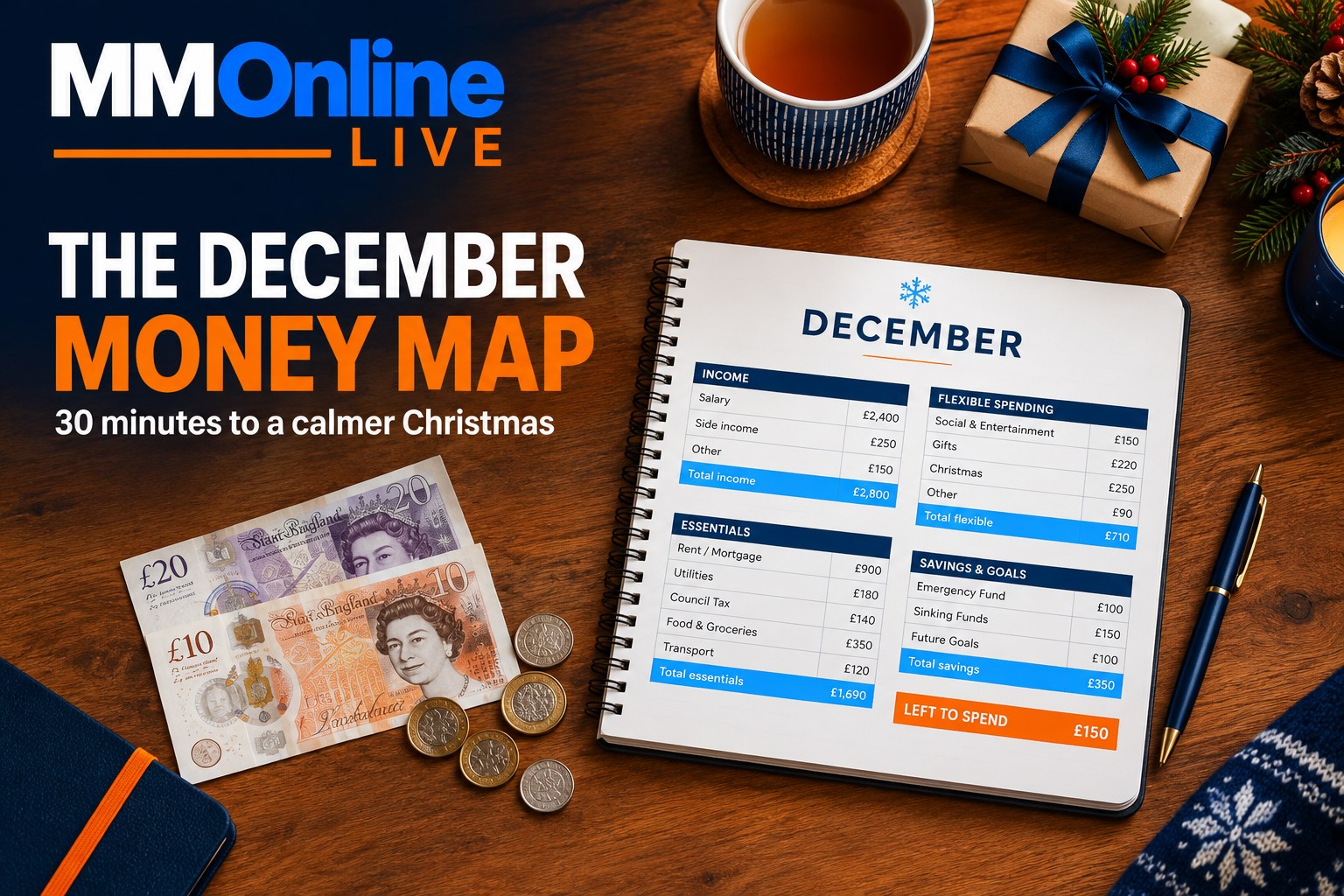
The 30-Minute December Money Map: Enjoy Christmas Without a January Money Hangover
📋 In this article
- 1. Find your real spending number (5 minutes)
- 2. Give Christmas its own little plan (5 minutes)
- 3. Make your money map — an example
- 4. Let Black Friday pass the test (5 minutes)
- 5. Pick one no-spend money move (5 minutes)
- 6. Give January a seat at the table (5 minutes)
- Draw your December Money Map.
- Over to you: what's your December money mission?
MMONLINE LIVE · THE MONEY DESK
Thirty minutes today could make the next five weeks much less chaotic.
No impossible savings targets. No guilt about enjoying Christmas. Just a quick map of what needs paying, what's worth buying and what can wait.
It's Wednesday 25 November. Black Friday arrives on Friday 27 November 2026, Cyber Monday follows on Monday 30 November, and December is peering around the corner with a shopping list in its hand.
There's a lot of talk about the best bargains this week. But here's a question that matters more: how much of your money is actually available to spend?
Welcome to the MMOnline LIVE December Money Map — a 30-minute exercise to help keep the celebrations enjoyable without giving January an unwelcome surprise. You don't need a spreadsheet. A notebook, your banking app and a cuppa will do nicely.
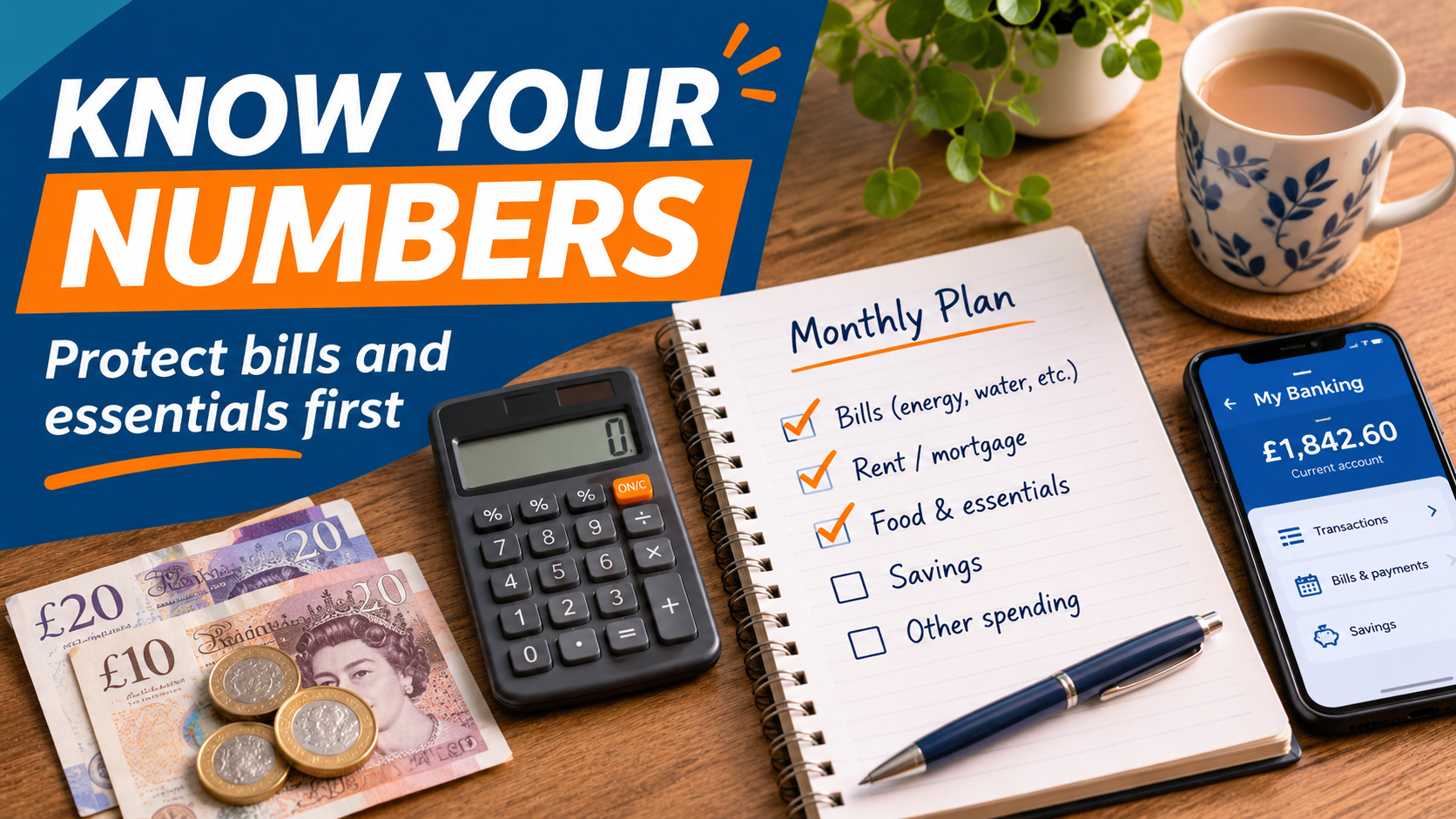
1. Find your real spending number (5 minutes)
Check your account balance and write down any money you expect to receive before your next payday. Then subtract what still needs paying: housing, energy, food, transport, essential repayments and other commitments.
Don't count a bank-switch bonus, cashback or marketplace sale until the money has actually arrived. And don't treat your overdraft as Christmas spending money.
If your essential spending uses up what's available, that's your answer for now: protect the essentials. There is no requirement to find money for gifts that isn't there.
2. Give Christmas its own little plan (5 minutes)
Put the Christmas costs you choose to have into a few simple groups: gifts, festive food, travel, decorations and extras. If you're not celebrating Christmas, the same approach works for any December commitments or events.
Write down a cap for each group. There is nothing wrong with a smaller present, a shared meal or an honest conversation about doing things differently this year. The budget should suit your household, not somebody else's highlight reel.
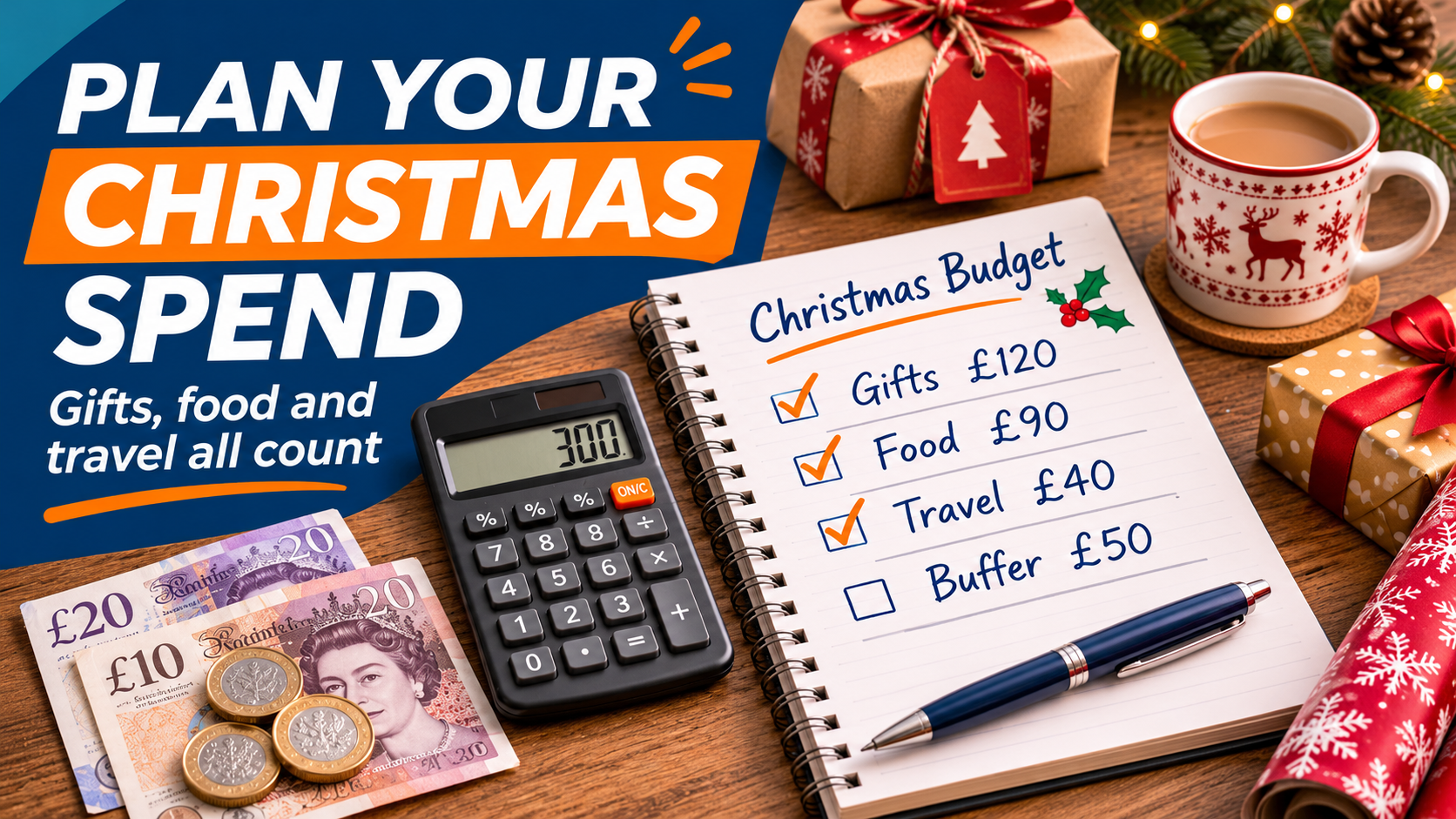
3. Make your money map — an example
Imagine you have £300 genuinely spare after essential bills and normal living costs. Here's one possible allocation — an illustration, not a target everyone should follow.
| Money mission | Example limit |
|---|---|
| Gifts | £100 |
| Extra festive food | £70 |
| Travel or visits | £40 |
| Unexpected costs | £30 |
| Leave untouched for January | £60 |
| Total | £300 |
That last £60 isn't a savings success story until it really remains unspent. Think of it as breathing room, not permission to add another item to the basket.

4. Let Black Friday pass the test (5 minutes)
Before buying anything in the sales, ask three questions: Was it on my list? Is the full delivered price below my spending limit? Have I checked the model, returns and genuine price history?
If you're unsure, start with our seven Black Friday checks for UK shoppers. A 40% discount on something you didn't need is still money leaving your account.
5. Pick one no-spend money move (5 minutes)
Now for something positive. Choose just one free action: list an unused item for sale, review a subscription, check a bill renewal, compare the price of a planned purchase or look through an existing cashback account for a reward that's ready to withdraw.
Our £100 Before Christmas Challenge has more ideas, but don't feel you need to do all seven. One genuine result beats a dozen screenshots of offers you never use.
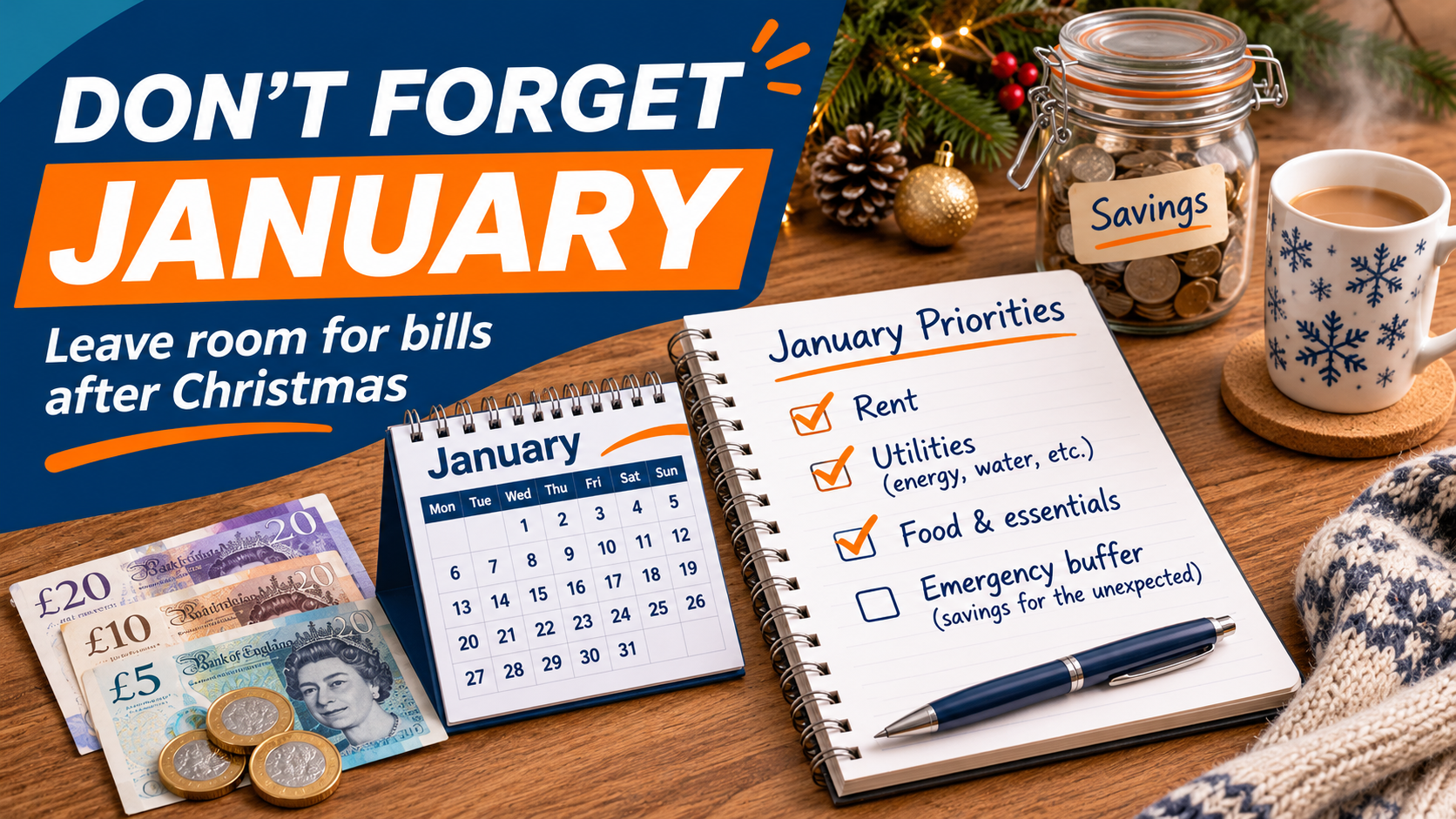
6. Give January a seat at the table (5 minutes)
Before you finish, look at the first bills and essential spending after Christmas. When will rent or mortgage payments fall due? Will your December payday arrive earlier than usual? Are travel, heating or food costs likely to be higher?
If you have room to do so, put a little money aside now. MoneyHelper's Christmas savings guidance explains why planning ahead can soften the financial pressure after the festive period. StepChange also recommends budgeting around realistic paydays and essential expenses.
MMONLINE LIVE · THIS WEEK'S MONEY MISSION
Draw your December Money Map.
1. Protect the bills
2. Set your spending caps
3. Check the January buffer
Your map can be £0, £50 or £500. The win is knowing where you stand.
Over to you: what's your December money mission?
Which would help you most right now: finding a little extra cash, reducing a bill, buying presents more carefully or simply keeping January under control?
Leave a comment with your number-one priority — and if you have a clever no-cost Christmas idea, share it so other MMOnline readers can try it too.
MMOnline LIVE is UK-first. This is general money-management information, not personalised financial advice. Every household has different needs and resources; compare the terms and costs of any financial product before acting. No paid promotions or affiliate links have been added to this article.